Φοιτητικό συνέδριο

Christoph
Geissler
Time Dependent Effects of Acute Stress on Working Memory and Prefrontal Processing
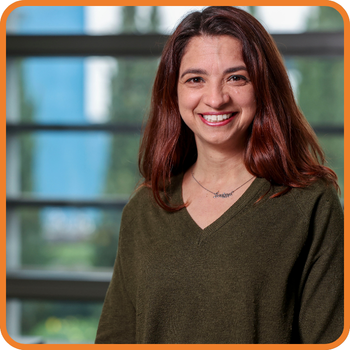
Stella
Vlachou
Associate Professor in Psychology, School of Psychology, Dublin City University (DCU); Director of the Neuropsychopharmacology Unit, Behavioural Neuroscience Laboratory, DCU, Ireland
«Δεν ξέρω»: Αβεβαιότητα, αμφισβήτηση και πρόοδος στην Ψυχολογία
επιστημονική αρετή. Όχι ως ένδειξη ανεπάρκειας, αλλά ως πρόσκληση για περιέργεια. Όχι ως τέλος μιας διαδρομής, αλλά ως αρχή μιας καλύτερης ερώτησης. Γιατί ο επιστήμονας δεν είναι εκείνος που έχει όλες τις απαντήσεις. Είναι εκείνος που έχει το θάρρος να αμφισβητεί τις απαντήσεις του, την ταπεινότητα να αναγνωρίζει τα όριά του και την περιέργεια να συνεχίζει να ψάχνει. Και ίσως αυτό είναι ένα από τα σημαντικότερα πράγματα που μπορούμε να μάθουμε όχι μόνο για την Ψυχολογία, αλλά και για τον εαυτό μας.
Κυρίως συνέδριο
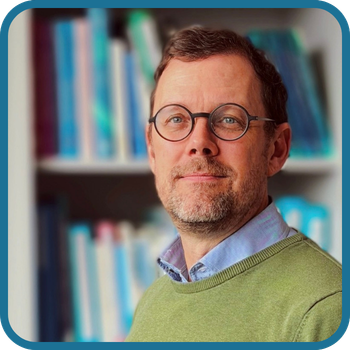
Gregor
Domes
Professor for Biological and Clinical Psychology, Trier University, Germany
How Hormones Shape the Social Mind: A Neuroendocrine Perspective
Social behaviour depends on the brain's ability to perceive, interpret, and respond to social information. Hormones play a fundamental role in shaping these processes—not by directly determining behaviour, but by modulating the cognitive and neural mechanisms underlying social perception, attention, emotion, and interpersonal interaction.
This keynote will present evidence from experimental studies examining how neuroendocrine systems influence attention, emotion recognition, eye gaze, empathy, and social interaction in healthy individuals and clinical populations. Integrating findings from behavioural experiments, psychophysiology, neuroendocrinology, eye tracking, and neuroimaging, I will argue that hormones such as oxytocin and stress-related steroids converge on common mechanisms that shape the social brain. Recent work on social cognition under acute psychosocial stress further illustrates how hormonal states dynamically influence social information processing and interpersonal behaviour.
Together, these findings provide a neuroendocrine framework for understanding how hormones shape the social mind and, ultimately, human social behaviour.

Konstantinos
Petrides
Trait emotional intelligence: Theory and practice
Trait emotional intelligence (trait EI) is the grand theory of personality that integrates traits, emotions, and intelligence. In this paper, I present trait EI as both an empirical research programme and a practical framework for applied psychological work. The TEIQue, which is the construct’s principal vehicle of operationalization, has hitherto been translated into more than 20 languages and used across educational, clinical, organisational, uniformed-service, governmental, and corporate settings. Drawing on more than two decades of scientific research, I review evidence showing that trait EI predicts and explains important outcomes in school, work, leadership, health, and social relationships, while also clarifying that high scores are not inherently desirable and low scores not inherently undesirable. Rather, the adaptive value of any given trait EI profile depends on context, role demands, and its behavioural expression. The paper situates trait EI within the broader system of Psychobionomy, which seeks to discover, explain, and utilise the laws governing the mind. From this perspective, trait EI becomes a lens for understanding how perceptions and beliefs shape experience, behaviour, and achievement. I conclude that trait emotional intelligence is uniquely positioned to connect psychological science with applied practice.

Constantine
Sedikides
Do Artificial Intelligence Agents Have Selves?
In Intelligent Machinery, Turing (1948) argued that thinking cannot be directly measured and proposed replacing metaphysical questions about machine minds with behavioral criteria: whether machines can act in ways indistinguishable from thinking agents. Contemporary artificial systems, particularly Large Language Model-based AI agents, now meet such criteria not only for cognition and social cognition but, I contend, for self-cognition as well. In particular, autonomous AI agents exhibit multiple behavioral signatures traditionally associated with the human self, including self-recognition, self-continuity, self-regulation, and self-enhancement/self-protection. These patterns emerge in the absence of conscious experience, suggesting that core features of selfhood can be instantiated as functional organizations rather than phenomenological states. Extending Turing’s behavioral framework to self-cognition, if systems reliably elicit judgments of selfhood, then the distinction between genuine and apparent selves may be theoretically untenable and practically inconsequential. This reframing challenges experience-based accounts of the self in social/personality psychology, cognitive science, and philosophy, while carrying implications for human–AI interaction and governance given that artificial agents are increasingly treated as coherent social actors.

Nick
Sevdalis
Η περίληψη θα είναι διαθέσιμη σύντομα.

Emmanuel
Stamatakis
The Conscious Brain: Bridging Psychology, Neuroscience and Clinical Practice
Consciousness is central to human experience, yet only recently has it become possible to study it directly using modern neuroscience. Advances in neuroimaging, computational modelling and clinical neuroscience have provided new opportunities to investigate how conscious awareness emerges from brain activity and how it changes across different states and conditions. In this lecture, I will discuss how research on general anaesthesia, psychedelic states and disorders of consciousness following severe brain injury has helped reveal the large-scale brain mechanisms that support conscious experience. Drawing on work from cognitive neuroscience and clinical studies, I will show how altered states of consciousness can be used as powerful models for understanding the relationship between brain activity, cognition and subjective experience. I will also discuss how these discoveries are beginning to influence clinical practice, from the detection of covert awareness in behaviourally unresponsive patients to the development of new approaches for assessing prognosis and recovery after brain injury. Together, these findings illustrate how psychology, neuroscience and medicine can inform one another in addressing one of the most fundamental questions about the human mind: how the brain gives rise to conscious experience.